Friday, July 31, 2026 at 1:54 PM PDT
Mortgage Rates Climb Again as Inflation Keeps the Bond Market Cautious
Mortgage rates moved higher this week, reminding buyers that the path toward lower borrowing costs remains uneven. Freddie Mac’s weekly survey showed the average 30-year fixed mortgage at 6.66% as of July 30, up eight basis points from 6.58% one week earlier. The 15-year fixed average also gained eight basis points, rising from 5.96% to 6.04%. The 30-year average remains slightly below the 6.72% recorded a year ago, but the recent direction has clearly been upward.
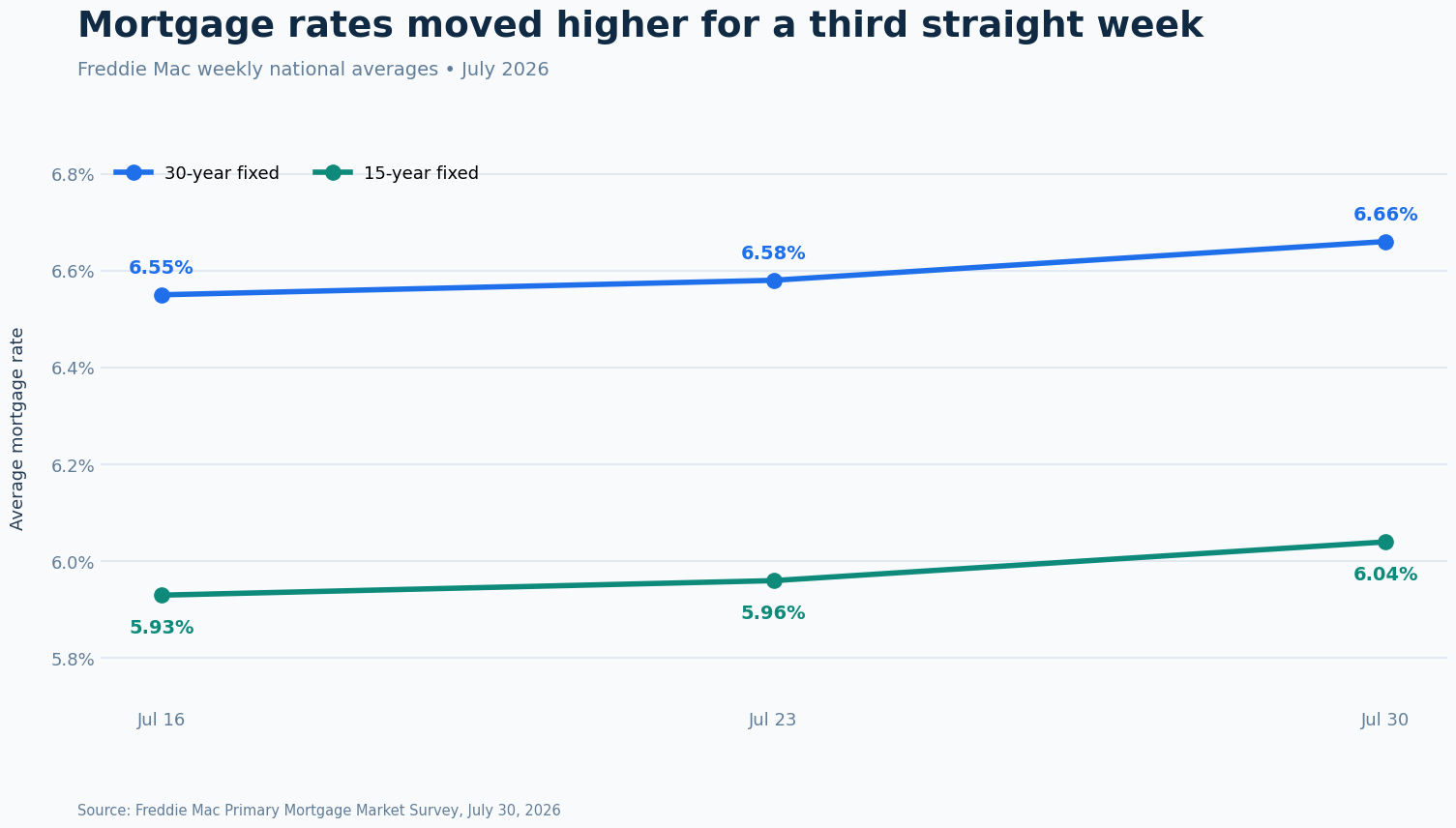
Friday brought additional pressure. Mortgage News Daily’s more responsive daily index reached 6.83%, up another six basis points for the day. That does not conflict with Freddie Mac’s 6.66% reading: Freddie Mac reports an average of applications submitted from the previous Thursday through Wednesday, while the daily index reacts more quickly to live bond-market movement.
The main pressure is coming from longer-term bond yields. The 10-year Treasury yield—an important benchmark for mortgage pricing—closed at 4.68% on Thursday and traded near 4.74% on Friday as Treasury prices fell. Mortgage rates do not follow the federal funds rate point for point. They are influenced more directly by mortgage-backed securities, Treasury yields, inflation expectations, and the extra return investors demand for holding longer-term debt.
The Federal Reserve added to the caution this week. Policymakers held the federal funds target range at 3.50% to 3.75%, but the vote was 9–3. Three members preferred an immediate quarter-point increase. The Fed also said inflation remains elevated relative to its 2% objective, partly because of supply shocks and higher energy prices. That does not guarantee a hike at the next meeting, but it makes a rapid series of rate cuts look less likely.
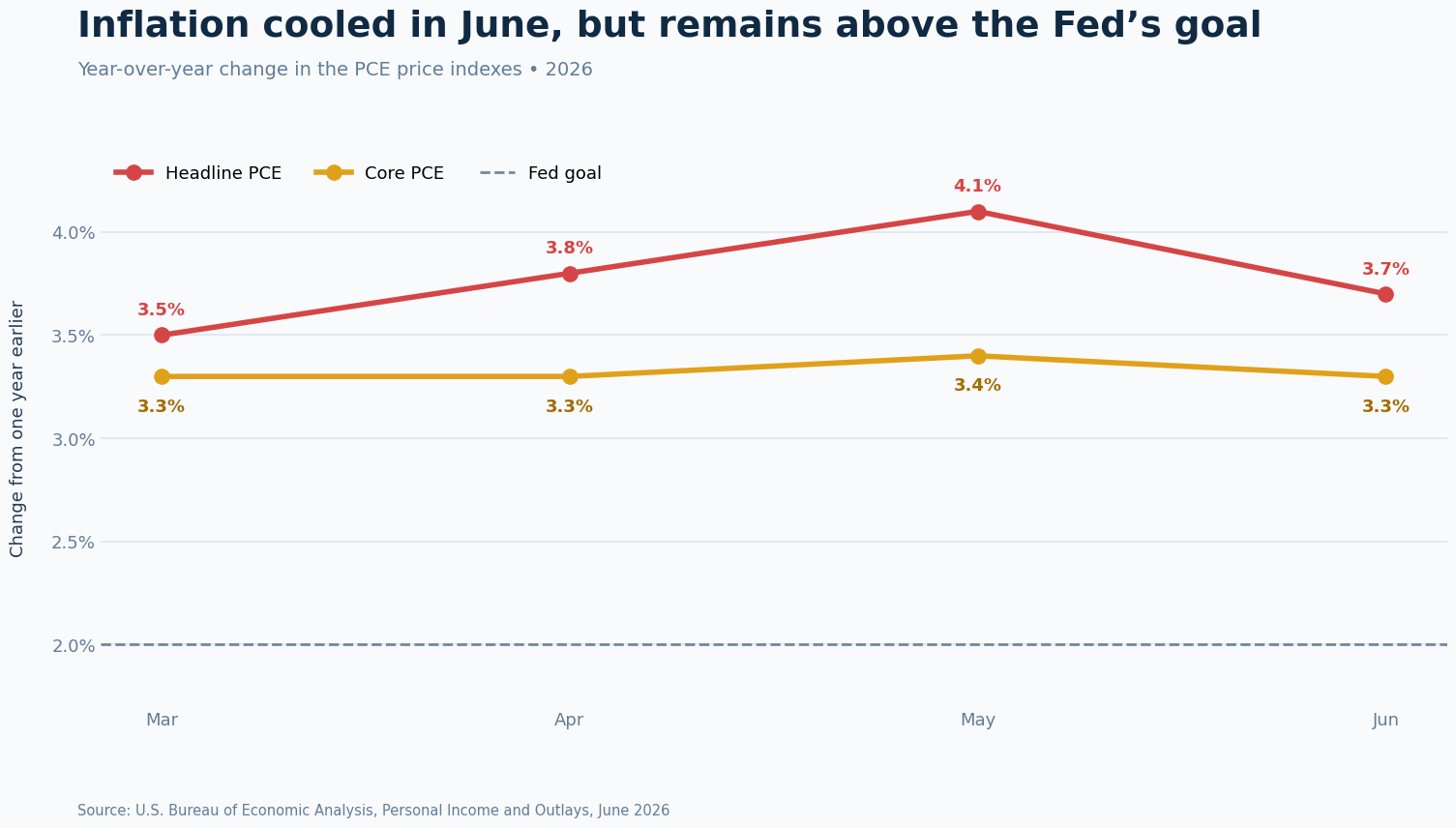
The latest inflation report was mixed. The headline PCE price index fell 0.1% in June, and core PCE rose only 0.1% for the month. However, compared with one year earlier, headline PCE was still up 3.7%, while core PCE was up 3.3%. The softer monthly figures are encouraging, but bond investors will likely want several more favorable readings before concluding that inflation is moving sustainably toward 2%.
Economic growth also slowed without showing a clear collapse. Real GDP grew at a 1.5% annualized rate during the second quarter, down from 2.1% in the first quarter. Yet private domestic demand rose a stronger 3.9%, while the gross domestic purchases price index increased at a 5.7% annualized pace. Slower headline growth combined with persistent price pressure leaves the Fed—and the mortgage market—without an easy direction.
For a borrower, this week’s eight-basis-point increase raises principal and interest on a $500,000, 30-year loan by roughly $27 per month. That is manageable in isolation, but several similar moves can quickly affect purchasing power. Buyers should request an updated quote, compare zero-point and discount-point options, and discuss a clear lock-versus-float strategy. Actual pricing will still vary by credit, down payment, occupancy, property type, loan program, and lender.
Homeowners considering a refinance should focus on the break-even period rather than the headline rate alone. A slightly lower payment may not justify closing costs if the loan will be sold, refinanced again, or paid off soon. Ask for a side-by-side comparison showing total costs and monthly savings.
The near-term outlook remains volatile. Lower mortgage rates are still possible if inflation cools, labor-market data weakens, or geopolitical pressure eases. For now, however, planning around rates in the mid-to-upper 6% range is more realistic than assuming immediate relief.
This material is for informational purposes only and is not financial, legal, tax, or lending advice. Mortgage rates and program terms vary by borrower and may change without notice.